
Overland Park, Kansas
Mold Removal Overland Park, KS
Our mold removal Overland Park service starts where mold usually starts: with a moisture problem. Clear Air KC helps Overland Park property owners find where the moisture is coming from, work out how far the problem goes, and choose the right next step, from targeted mold removal to full remediation when the situation calls for it.
Call to discuss what you’re seeing, where moisture may be coming from, and what to do next.
- Serving Overland Park and the Kansas City metro
- Mold and water damage support
- A moisture focused approach
- Clear next steps, explained plainly
Sound familiar?
Dealing With Mold in Your Overland Park Home?
Finding mold can leave you unsure whether you’re looking at a small surface issue, an ongoing moisture problem, or something that needs broader remediation. Maybe the spot came back after you cleaned it. Maybe the basement smells musty every spring. Maybe you’re selling, and a buyer noticed a stain.
Whatever brought you here, the useful questions are the same: where is the water coming from, how much material is affected, and what is the sensible fix? Those are the questions Clear Air KC helps answer.
Common reasons people call us
- Visible spots on drywall, trim or ceilings
- A musty smell that won’t go away
- Mold that returns after cleaning
- A damp or finished basement
- Moisture in a crawl space
- Frost, stains or growth in the attic
- Growth after a plumbing or roof leak
- Mold after flooding or a backup
- Worry about what’s behind the drywall
- Buying or selling a home
- Not sure whether testing is needed
- A rental unit with a recurring problem
What Should I Do If I Find Mold in My Overland Park Home?
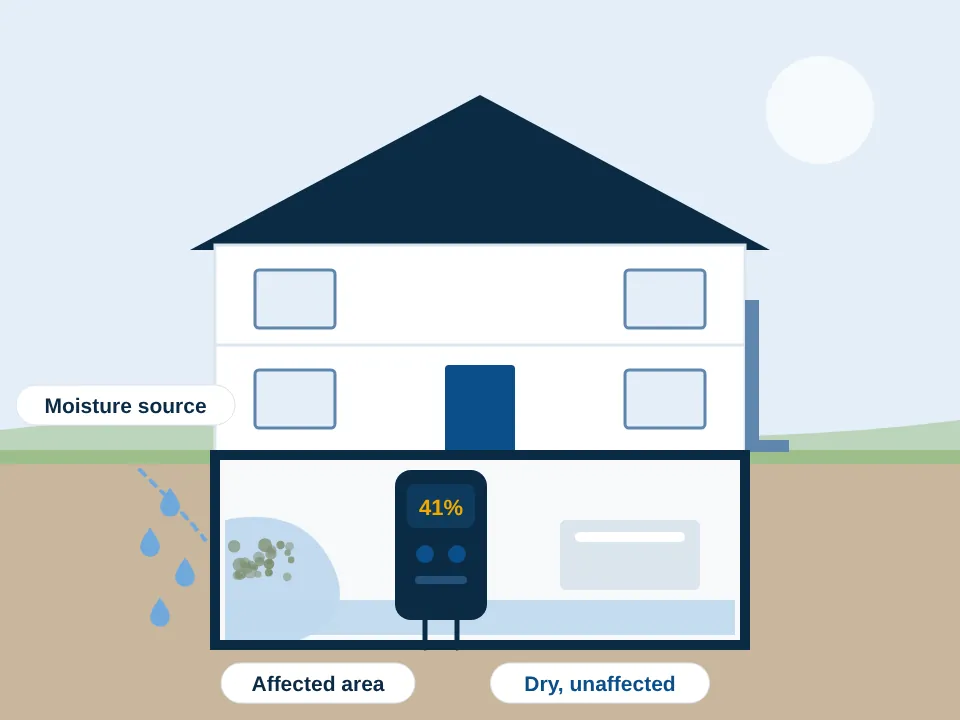
Start with the water, not the mold. Growth needs moisture, so cleaning a spot without fixing a leak, high humidity or seepage usually means it comes back. Next, look at the size: the EPA notes that a patch smaller than about 10 square feet can often be handled by a homeowner, while larger or hidden growth deserves a professional look. When the source or extent is unclear, moisture readings on the first visit map it before anything is opened. If remediation is needed, the affected materials and the moisture source are dealt with together.
- Find and stop the moisture source
- Judge whether the area is small or widespread
- Trace hidden moisture with meter readings
- Contain the area if the patch is large or hidden
- Remediate materials and fix the source together
Local conditions
Why Moisture Problems Can Become Mold Problems in Overland Park
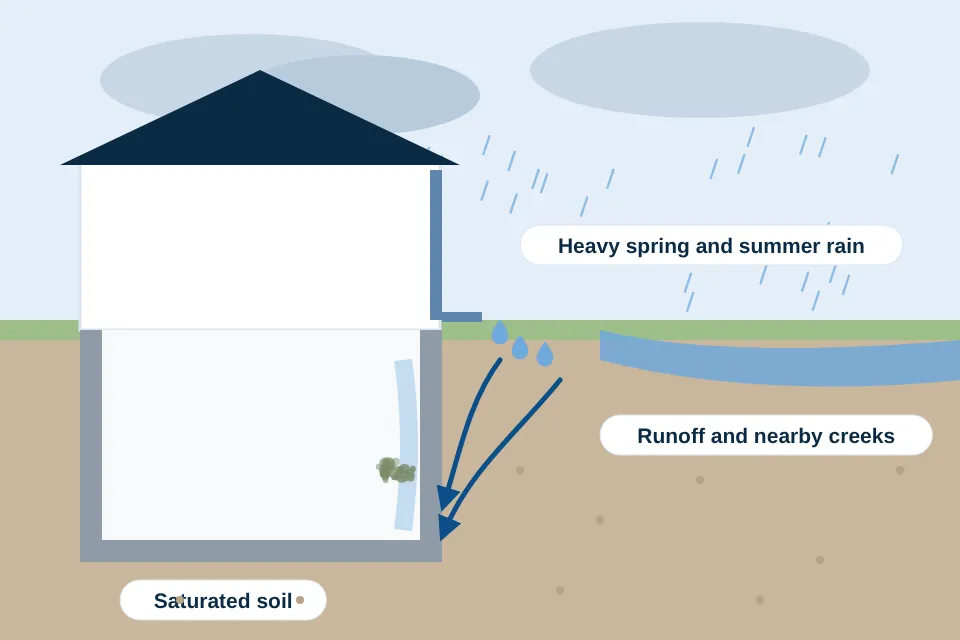
Overland Park gets most of its rain during the warm months, and that timing matters. Water that reaches a basement wall, crawl space or wall cavity in late spring often meets the humid air of summer, which slows drying and gives mold the conditions it needs.
- Wet late spring
- May and June are the rainiest months here, each averaging close to 5 inches of rain.
- Long humid stretch
- Muggy conditions typically run from late May to late September, so damp areas dry slowly.
- Storms and creeks
- Indian Creek and Tomahawk Creek have been studied and mapped for flood risk across Johnson County, and the city continues to invest in stormwater improvements.
- Below grade spaces
- Finished basements and crawl spaces sit against the soil, so water from the outside can wick in quietly.
Not every home here has the same risk. Gutters, grading, sump pumps, plumbing age and how a basement was finished all change the picture, so each Overland Park house gets checked on its own terms.
Source: USGS flood inundation maps for Indian Creek and Tomahawk Creek.
Primary service
Mold Removal & Remediation in Overland Park
Removal and remediation are related but not the same thing. The right approach depends on what is actually going on in your home, not on a fixed package. Some people call this mold mitigation; whatever the name, the job is the same: stop the moisture, contain the area and remove what can’t be cleaned.
| Mold removal | Mold remediation | |
|---|---|---|
| What it is | Targeted cleanup or removal of affected surfaces and materials. | A fuller process: containment, removal or cleaning, drying, and correcting the moisture source. |
| Often fits when | Growth is limited, the cause is known and fixed, and nothing suggests it extends further. | Growth is larger, hidden, in porous materials, or tied to a leak or water event. |
| Main focus | The visible problem. | The visible problem, the hidden extent, and stopping it coming back. |
What Decides the Approach
- SizeHow much area shows growth or damage.
- MaterialsDrywall, wood, insulation or carpet react differently.
- Moisture sourceWhether the water is active, past or recurring.
- LocationBasement, attic, crawl space or living area.
- Hidden extentWhether growth continues behind or beneath surfaces.
What remediation work can involve
- Moisture detection. Readings to map wet materials and confirm the source.
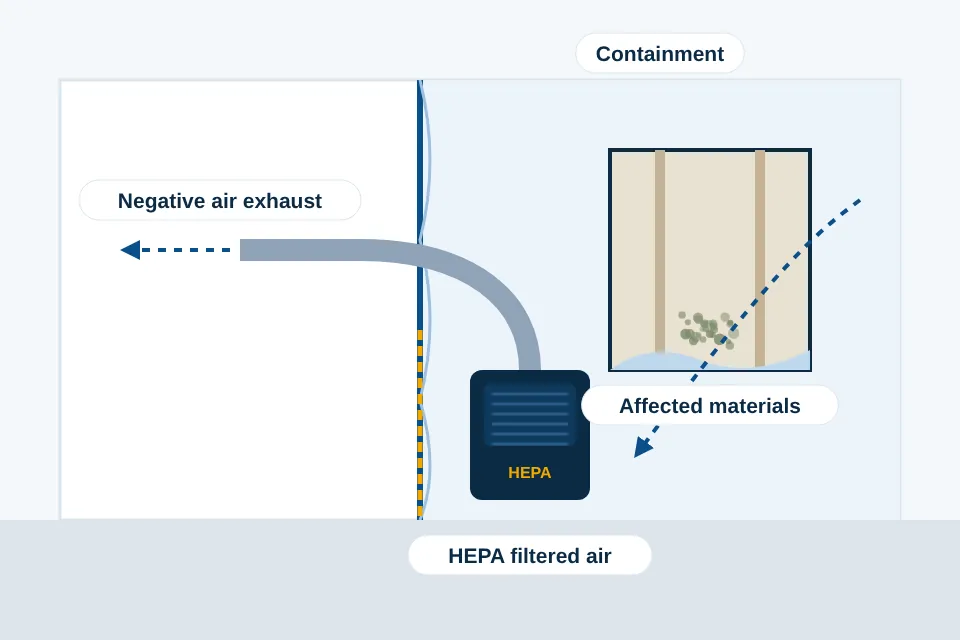
- Containment. Plastic barriers that keep disturbed spores out of clean rooms.
- HEPA filtration and negative air, where appropriate, to capture particles and control airflow.
- Removal or cleaning. Porous materials that can’t be cleaned are removed; others are cleaned.
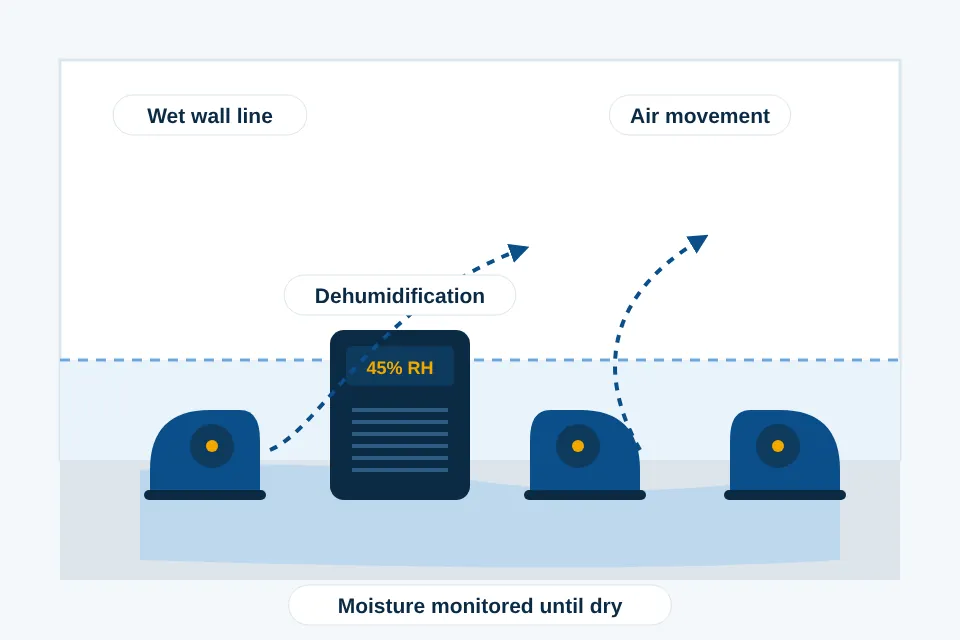
- Drying. Equipment runs until walls and floors read the same as unaffected areas nearby.
- Source control. Fixing, or telling you exactly how to fix, whatever let the water in.
- A final check. A last walk through and readings so you know the area is clean and dry before it’s closed.
Clear Air KC follows recognized professional practice, including the approach set out in the IICRC S520 standard for mold remediation, where it applies to the job.
Where we find it
Types of Mold Problems in Overland Park Homes
Basement Mold
Usually starts at the bottom of walls, behind furniture or under carpet. The moisture often comes from seepage, high humidity or a past leak. The next step is finding where water enters and checking finished walls, since growth can sit behind drywall that looks fine.
Crawl Space Mold
Crawl spaces stay cool and damp, and exposed soil releases moisture into the air. Growth on joists or subfloor is common. A visit usually looks at ground cover, ventilation, drainage and plumbing above, because the fix is often about moisture as much as cleanup.
Attic Mold
Dark staining on roof sheathing often points to warm, moist air from the house reaching a cold attic, or to a roof leak. Bathroom fans that vent into the attic are a frequent cause. Ventilation and air sealing matter as much as treating the wood.
Bathroom and Interior Mold
Showers, window sills and exterior walls collect condensation. Small surface spots are often a cleaning and ventilation issue. Growth that keeps returning, spreads under paint or appears near plumbing may mean a hidden leak.
Mold After Water Damage
A burst pipe, appliance leak or storm can leave drywall, insulation and flooring wet for days. EPA guidance gives roughly a day or two to get wet materials dry. If that window passed, the materials should be checked before rebuilding.
Hidden or Recurring Mold
A smell with no visible source, or mold that keeps coming back after cleaning, usually means the moisture problem was never solved. Moisture readings and a careful look at the building history help locate it before anything is opened up.
Water damage restoration
Overland Park Water Damage: The First 48 Hours
Water damage restoration in Overland Park comes down to speed: the sooner standing water is out and drying equipment is running, the less has to be cut out later. Clear Air KC crews respond 24/7 across the city, from older ranch homes in the north to newer two story houses with finished basements and sump pits further south.
Most calls start one of four ways: a sump that fell behind in a hard storm, a split washing machine hose, a supply line that froze in an outside wall, or seepage along a basement wall on a lot that drains toward the house. We extract the water, pull soaked carpet pad and the bottom of drywall where readings call for it, then run dehumidifiers and air movers with a moisture check every day until the structure is dry. Before anything is rebuilt, the affected areas are checked for mold.
- Hour one: shut off the water and the breakers to wet rooms
- First visit: extraction and a moisture map of floors and walls
- Days one to three: drying, with readings logged each day
- Once dry: a mold check, then repairs
See the equipment and drying steps on our water damage restoration page.
Supporting service
Water Damage Restoration in Overland Park
Many mold problems begin as water problems. A leak soaks materials, the moisture lingers because drying was incomplete, and growth follows. Handling the water quickly and properly is the most reliable way to stop that chain.
- Burst pipes
- Plumbing leaks
- Appliance leaks
- Roof leaks
- Basement water
- Storm water
- Sewage backup
- Standing water
- Hidden moisture
- Emergency water extraction
- Structural drying
- Moisture monitoring
- Dehumidification
- Assessment of affected materials
- Repair and restoration where applicable
Water Damage in Overland Park?
Call now if water is still present, or read how drying works.
Choose with confidence
Which Service Fits the Problem?
Growth is present
Mold Removal / Remediation
Fits when mold growth is present or confirmed and the affected materials need to be addressed.
Call about removalSomething is uncertain
Moisture Tracing
Fits when you smell mold but can’t see it. A meter check on the first visit pins down the wet spot without cutting into walls.
How the first visit worksWater is the problem
Water Damage Restoration
Fits when active or recent water needs extraction, drying and moisture control.
About water damage restorationWhat happens after you call
Our Process, Step by Step
- 1
Call and Listen
You explain what you’re seeing and what happened.
- 2
Look Around the Problem
The stained area, the rooms beside it and the outside wall behind it.
- 3
Identify Moisture and Affected Areas
Readings show what is wet and how far it goes.
- 4
Explain the Options
You hear what we found and what each option involves.
- 5
Do the Work That Fits
Nothing added that the readings don’t support.
- 6
Help Prevent Recurrence
Guidance on the moisture source so it doesn’t return.
Want more detail? You can learn about our process for mold removal and remediation, or read how we handle mold removal in Kansas City across the whole metro.
Why it matters
Why Overland Park Homeowners Need a Clear Next Step
Most people don’t need more alarming information about mold. They need someone to look at the actual conditions and explain them plainly.
That’s how Clear Air KC works: moisture first, honest about how much work a home really needs, and clear about what was found. The standards we follow are on our about page.
Straightforward communication
Plain language, no pressure.
Moisture first thinking
The cause is part of every plan.
Clear findings
You see what we saw and why it matters.
No unnecessary demolition
Only material that reads wet or shows growth comes out.
Practical guidance
Options sized to the actual problem.
Mold and water together
One team that understands both.
A professional process
Containment and care where the job calls for it.
Local knowledge
Familiar with how homes here take on water.
Service area
Serving Overland Park, Kansas
This page is for homeowners, property owners, landlords, buyers and sellers, and businesses in Overland Park. Clear Air KC also works in nearby Johnson County communities and across the wider Kansas City metro. Send us your ZIP code when you contact Clear Air KC and we will confirm coverage. Nearby, we also cover Shawnee, Independence and Blue Springs; or browse our full service area list.
- Overland Park
- Lenexa
- Shawnee
- Kansas City metro
Overland Park questions
Mold and Moisture Questions From Overland Park Homeowners
Still have a question? Our full FAQ page covers more.
Overland Park, KS
Think You May Have Mold or Water Damage in Your Overland Park Home?
The sooner you understand the source and extent of a moisture problem, the easier it is to choose the right next step.