Kansas City Metro · Missouri & Kansas · 24/7 Emergency Response
Water Damage Restoration in Kansas City, MO
When water gets into a home or business, our water damage restoration Kansas City crews have one priority: remove the water, find the moisture that remains, and dry the affected materials before the damage spreads. Crews respond 24/7, including nights, weekends and holidays, and the phone is answered around the clock. Clear Air KC provides water removal, structural drying, moisture detection and restoration support across the Kansas City metro.
- Emergency water removal
- Drying guided by moisture readings
- Homes and businesses
Water coming in right now?
- 1Shut off the main valve if you can do it safely.
- 2Stay clear of outlets and cords in wet areas.
- 3Photograph the damage, then call.
Quick answer
What Should I Do After Water Damage?
Act quickly. Wet materials should be dried as soon as possible. EPA guidance says drying damp or wet materials within 24 to 48 hours helps prevent mold growth. The first priorities are stopping the source, removing what’s standing, locating the moisture that remains and starting thorough drying.
Every job is planned around what actually happened, so the right next step depends on a few things you can usually describe on the phone.
What Shapes the Plan
- How much is present
- What caused it
- Which materials got wet
- How long they stayed wet
- Whether it is contaminated
- Whether moisture is hidden
Our process
How Water Damage Restoration Works
Restoration follows a structured process focused on extraction, drying, documentation and repair. Where applicable, work follows ANSI/IICRC S500 water damage restoration principles.
- 1
Emergency Response and Inspection
We find the source, check for safety concerns and see how far the leak traveled.
- 2
Water Extraction
Pumps and extraction equipment clear floors, carpet and basements.
- 3
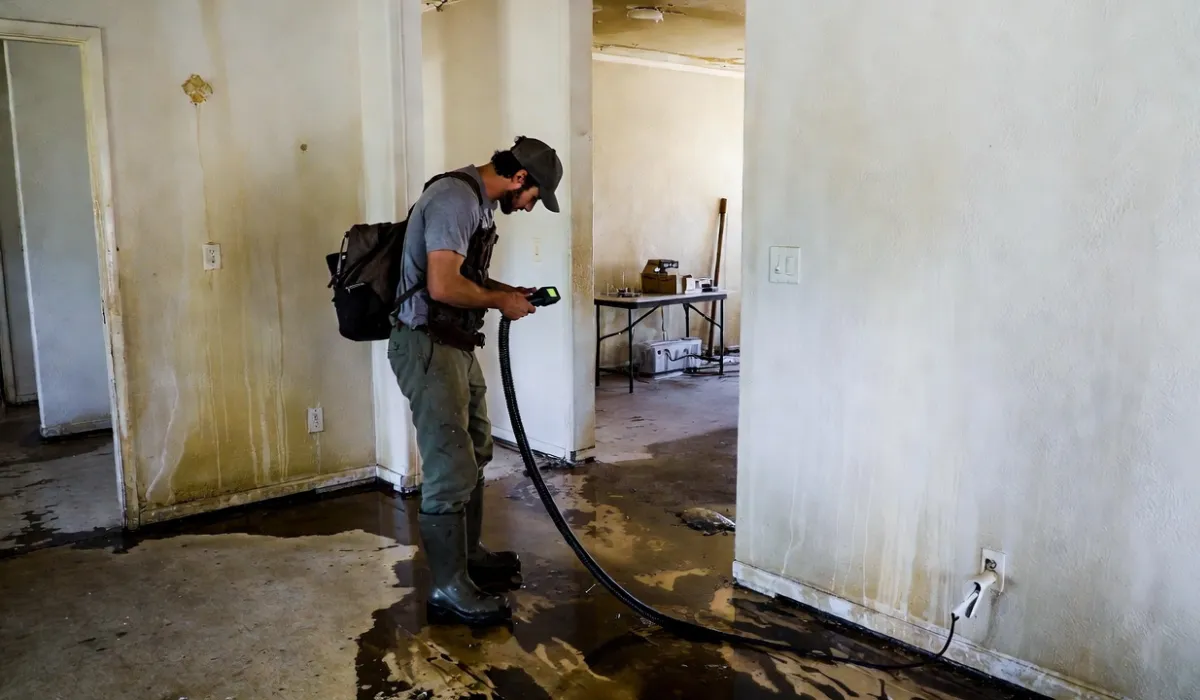
Moisture Mapping
Readings and thermal imaging show which walls, floors and ceilings still hold moisture.
- 4
Structural Drying
Air movers and commercial dehumidifiers are placed to dry the framing, subfloor and drywall, where water soaks in after the surface looks dry.
- 5
Drying Verification
Readings are repeated until materials reach a normal dry level for that material.
- 6
Cleanup and Repairs
Materials that can’t be saved are removed, and repairs follow once the structure is dry.
- 7
Final Documentation
Photos, readings and a record of the work, useful for your files and your insurer.
Water removal
Emergency Water Removal
The sooner standing water is removed, the sooner affected materials can move into the drying phase. Extraction comes first because soaked materials keep absorbing more, and every hour adds to what must be dried or replaced.
Pumps
For deeper standing water in basements and crawl spaces.
Extraction equipment
Pulls moisture out of carpet, padding and hard floors.
Wet material removal
Saturated padding or drywall that won’t dry well is taken out.
Drying
Structural Drying and Dehumidification
Once extraction is done, the building still holds moisture in walls, floors, ceilings and subfloors. Drying equipment is placed and adjusted around what the readings show.
Air movers
Move air across wet surfaces so moisture evaporates.
Commercial dehumidifiers
Pull that moisture out of the air so it doesn’t settle back in.
Moisture meters
Measure moisture in drywall, wood and other materials.
Thermal imaging
Reveals temperature patterns that may point to areas needing a closer look.
Hidden moisture
Finding Hidden Moisture
A surface that looks dry isn’t always dry inside. Moisture wicks up drywall, runs along framing and settles under flooring, so the damage often extends past the stain you can see.
Moisture mapping is simply recording readings across the affected area and marking where they are high. It helps identify areas that need closer inspection or additional drying, and the same points are checked again until they come back down.
Where Moisture Hides
Common causes
Common Causes of Water Damage in Kansas City
The cause shapes the cleanup. Here’s what each one usually means for the restoration work.
Burst Pipes
A fast indoor release that soaks drywall, insulation and flooring.
Frozen Pipes
Lines in exterior walls split in hard freezes and leak inside the wall.
Basement Flooding
Foundation seepage that reaches flooring, drywall and stored belongings.
Heavy Rain and Runoff
Overwhelmed gutters and grading push runoff in at the lowest point.
Roof Leaks
Rain enters attics and ceilings and spreads through concealed spaces.
Sump Pump Failures
A stuck pump or power loss during a storm floods the lower level.
Sewer Backups
A contaminated loss that needs protective measures and careful cleanup.
Water Heater Failures
A large volume released in a utility room or closet.
Washing Machine Leaks
Failed hoses flood floors and drip into rooms below.
Dishwasher Leaks
Slow leaks under cabinets that damage subfloors over time.
Fire Sprinkler Discharge
Wide coverage across ceilings, walls and contents in seconds.
Plumbing Failures
Supply lines, fittings and drains leaking inside walls or under floors.
Water type
Clean Water, Gray Water and Contaminated Water
Not every leak is equally hazardous, but the source changes what can be saved. These are practical categories, not a legal classification.
Clean Water
From a relatively sanitary source, such as a broken supply line.
- Often dried in place when work starts quickly
- Can worsen if left sitting
Gray Water
May contain contaminants, such as a washer or dishwasher discharge.
- Surfaces need cleaning and sanitizing
- Some porous items may be removed
Sewage and Floodwater
Sewer backups and water from outside need professional handling.
- Protective measures during cleanup
- Soaked porous materials are removed, not dried
For significant flooding or any sewage, professional help is the safer choice. Avoid contact with it and keep children and pets away from the area.
Who we help
Restoration for Homes and Businesses
Residential
Houses, apartments, condos and townhomes
- Basements and crawl spaces
- Wet drywall, flooring and subfloors
- Belongings moved and protected
- Hidden moisture found before walls are closed
- Less disruption to daily life
Commercial
Offices, retail, restaurants, warehouses and more
- Medical facilities, schools, churches and hotels
- Apartment complexes
- Access coordinated with your team
- Drying occupied buildings where feasible
- Documentation and repair planning
Prevention
Why Fast Drying Matters for Mold Prevention
Lasting dampness creates the conditions mold needs, and the EPA calls moisture control the key to mold control. Prevention comes down to a simple order of work:
- 1Stop the source
- 2Remove standing water
- 3Dry wet materials
- 4Fix the source
- 5Verify the drying
If growth has already started, see mold inspection and testing or our mold removal page.
After drying
Water Damage Repair and Restoration
Where repair services are provided, damaged materials can be repaired or replaced after the drying phase. Rebuilding before materials are dry traps moisture, so repairs wait for the readings.
- Drywall replacement and finishing
- Flooring
- Baseboards and trim
- Painting
- Structural materials that were damaged
Insurance
Water Damage and Insurance Claims
- Photos of the damage and the work
- Moisture readings over time
- Notes on the affected areas
- Records of the work performed
These records may be useful when communicating with your insurer. Coverage decisions are made by your insurance company under your policy.
How we work
A Clear Plan From the First Call
Plain Answers on the Phone
What to do right now and what happens next.
Drying by the Numbers
Equipment stays until readings show materials are dry.
Everything Documented
Photos, readings and work records you can keep.
No Guesswork on Repairs
Repairs start only after the structure is verified dry.
Reviews
Hear From Our Clients
Fast Response and Excellent Communication
A basement flood in our Brookside home was a nightmare, but ClearAir KC responded quickly and got to work right away. The team worked efficiently, kept us informed throughout the process, and handled the insurance process with State Farm. Our basement was completely restored, and the entire experience was handled professionally from start to finish. Excellent local service!
Outstanding Storm Damage Response
After a severe hailstorm moved through Johnson County, our office building in Overland Park suffered a major roof leak. ClearAir KC’s commercial team responded quickly and worked around the clock to dry out the affected areas and minimize our downtime. Their fast response and professional approach helped us avoid even greater business disruption. I would definitely recommend them for emergency storm and water damage restoration in the Kansas City metro.
Straightforward, Professional Service
We contacted ClearAir KC after discovering water damage in our crawl space in Independence. Unlike other companies we spoke with, they gave us a straightforward assessment without trying to upsell unnecessary services. The team did an excellent job drying the space and followed up afterward to make sure everything was properly taken care of. Professional, honest service with a genuine Midwest approach.
Pricing
How Much Does Water Damage Restoration Cost in Kansas City?
It depends on the size and type of the loss, so there isn’t one honest average price. A small clean leak caught early costs far less than a flooded basement with contaminated water and repairs.
Call (816) 476-3053 to discuss the situation and current pricing.
- Amount standing
- Source of the leak
- Contamination
- Square footage affected
- Materials involved
- Depth of moisture
- Access to the area
- Contents to move or clean
- Days of drying
- Repair scope
Service area
Serving the Kansas City Metro
Clear Air KC is based at 1501 Grand Blvd, Kansas City, MO 64108, and serves homes and businesses on both sides of State Line. See every area we cover, all services and how a job runs.
- Kansas City, MO
- North Kansas City
- Independence
- Lee’s Summit
- Blue Springs
- Raytown
- Overland Park, KS
- Shawnee
- Lenexa
Water Damage in Your Home or Business?
Start With Water Removal and Drying
Tell us what happened, where the water entered, and whether standing water or damp materials are still present. We can explain the next step and whether water removal, drying or additional restoration is needed.
Clear Air KC · 1501 Grand Blvd, Kansas City, MO 64108