Kansas City Metro · Missouri & Kansas · 24/7
Mold Inspection & Testing in Kansas City, MO
Our mold inspection Kansas City visits start with the building, the moisture conditions and what you’ve noticed. Sampling is used only when it can answer a specific question, because not every mold concern needs a laboratory test. You leave knowing what was found, what it means and what to do next.
- Starts with moisture
- Findings in plain language
- Sampling only when useful
Quick answer
Do I Need a Mold Test?
Often, no. When growth is already visible, the EPA says sampling is usually unnecessary, and there are no federal limits for mold spores to compare results against. What most people need first is an inspection that finds the moisture and the extent of the problem.
Sampling earns its cost when it answers a specific question: a musty odor with nothing visible, a decision about a home purchase, a water event that soaked hidden areas, or a check after cleanup.
- 1
Inspection first
Look at the building, its history and the moisture conditions.
- 2
Then the question
Decide what you actually need to know.
- 3
Sampling if it adds value
Collect samples only when results would change the decision.
Inspection vs testing
Mold Inspection vs Mold Testing: What’s the Difference?
An inspection is the broader investigation. Testing is one tool within it.
Inspection
The full picture of the building
- Visual assessment of accessible areas
- History of leaks, floods and repairs
- Moisture indicators and readings
- Likely moisture sources
- Signs of hidden problems
- Recommended next steps
Testing / Sampling
Used only when it answers a specific question
- Air samples when appropriate
- Surface samples when appropriate
- Laboratory analysis of what was collected
- Results read alongside the inspection findings
What we look for
What a Mold Inspection Looks For
Moisture first, because growth follows water.
Moisture Conditions
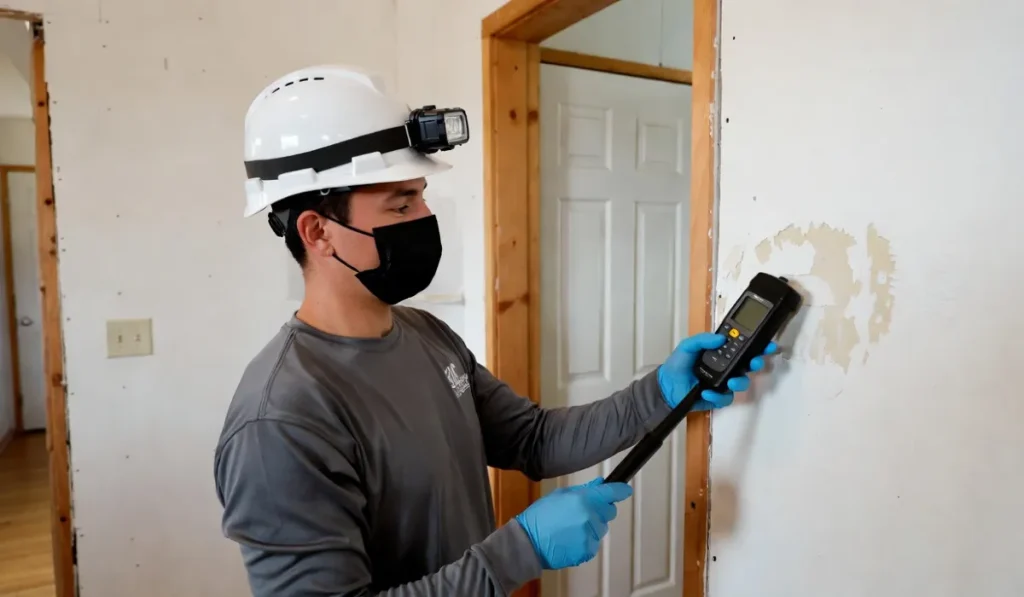
Damp framing, subfloors and drywall, measured with moisture meters, plus indoor humidity.
Visible Signs
Staining, discoloration, peeling paint, warped materials and visible growth.
Odor Clues
Where a musty smell is strongest, which often points toward a concealed source.
Likely Sources
Plumbing, roof and window leaks, foundation seepage, condensation and drainage.
Hidden Areas
Thermal imaging to spot temperature patterns that can indicate moisture behind surfaces.
Building History
Past floods, sewer backups, repairs and anything you’ve already tried.
Testing, honestly
When Testing Helps, and What It Can’t Tell You
When Mold Testing Is Useful
- A musty odor with nothing visible: sampling can help show whether there is an indoor source.
- A home sale or purchase: a buyer or seller wants documentation about a specific area.
- After a water event: hidden areas stayed wet and you want to know what may be inside.
- After cleanup: verification, ideally by someone independent of the cleanup work.
- A concern you’ve discussed with a doctor about conditions in the home.
What Testing Cannot Tell You
Sampling shows what was collected from one spot at one moment. It doesn’t prove a home is “safe” or “unsafe.”
- No test proves a link between a particular mold and specific symptoms, the CDC notes.
- There are no federal limits for indoor mold spores.
- Air results change with weather, activity and time of day.
- A test never replaces finding and fixing the moisture.
How lab results work: air samples are usually taken inside and outdoors at the same visit, so indoor results can be compared with an outdoor baseline. Surface samples (swab or tape) show what is growing on a specific material. Reports often name common types such as Cladosporium, Penicillium, Aspergillus or Stachybotrys, but the CDC says you don’t need to know the type to deal with it.
Some people are more sensitive to indoor mold or damp environments. If you have ongoing health concerns, discuss them with a qualified healthcare professional.
Local conditions
Why Kansas City Buildings Hide Moisture
Most hidden problems here start with water that got in weeks or months earlier.
Finished Basements
Drywall and carpet against cool foundation walls trap dampness out of sight.
Creekside Flooding
Homes near Brush Creek, the Blue River and Turkey Creek can hold water in walls after drying looked finished.
Older Housing
Plaster walls, original ductwork and stone foundations in Midtown, Brookside and the Northeast hold moisture differently.
Humid Summers
July air meets cold supply ducts and air handlers, and condensation drips into insulation.
Our process
How the Inspection Works
Six steps, with sampling only where it earns its place.
- 1
Talk Through the Concern
What you’ve noticed, when it started and any leak history.
- 2
Inspect Accessible Areas
A room by room look at the areas involved, plus attic, basement or crawl space access.
- 3
Look for Moisture
Moisture meters, a hygrometer and thermal imaging to find wet materials.
- 4
Decide on Sampling
Agree on whether sampling would answer a useful question before any is taken.
- 5
Collect Samples
Air or surface samples when appropriate, sent for laboratory analysis.
- 6
Explain Findings
Clear findings in plain language and practical next steps.
Buying or selling
Inspections for Buyers, Sellers and Landlords
An inspection or sampling can help in a transaction when there’s a specific concern.
- A musty odor in a basement or crawl space
- A history of leaks, floods or other water problems
- Visible staining or worry about hidden moisture
- A question raised by a buyer, seller or agent
A standard home inspection usually doesn’t include mold sampling, so buyers often ask for it during their inspection window. Lenders, insurers and the other party make their own decisions about any report.
Who we help
Homes and Commercial Properties
Residential: houses, condos and apartments, including units between tenants or after a complaint.
Commercial and property management: offices, retail spaces, restaurants and apartment buildings, with visits planned around occupants.
After the inspection: if cleanup is needed, see mold remediation. If water is still present, drying comes first through water damage restoration.
What you get
You’ll Leave Knowing What Was Found and What to Do Next
Clear Explanation
Know what was observed and why it matters.
Moisture Findings
Understand where moisture may be contributing to the problem.
Sampling When Useful
Testing is used when it answers a meaningful question.
Practical Next Steps
Leave knowing whether you need no action, a simple fix or professional help.
Reviews
What Kansas City Customers Say About Our Inspections
“We noticed a musty smell in our basement and wanted to know what we were dealing with before making any decisions. Clear Air KC came out, inspected the area carefully, and explained what they were looking for along the way. The testing process was straightforward, and the report gave us a much better understanding of the situation. We really appreciated the honest, no pressure approach.”
“I wanted a mold inspection before buying a home in Kansas City and called Clear Air KC because I didn’t want to guess about what I was seeing. The inspector was thorough and took the time to explain the findings in plain English. I never felt pressured into paying for services I didn’t need. The report was clear and easy to understand, which made the decision much easier.”
“We found what looked like mold in our basement and honestly weren’t sure if it was something serious. Clear Air KC came out and took the time to inspect the area properly instead of jumping straight to a solution. They explained what the testing could and couldn’t tell us and gave us a clear report afterward. Very professional and straightforward experience.”
“We were in the process of buying a home in Kansas City and wanted an independent mold inspection before moving forward. Clear Air KC was easy to schedule, showed up on time, and was very thorough. I especially liked that the inspector answered all of our questions without making the situation sound worse than it was. The report was detailed but still easy to follow.”
“After noticing a persistent musty odor in our home, we decided to have it inspected rather than assume we had a mold problem. Clear Air KC was professional from the first call. The inspection was thorough, the findings were explained clearly, and we received documentation that we could actually understand. I appreciated getting straightforward information without a hard sales pitch.”
“As a Kansas City property owner, I wanted a reliable company I could call when there was a concern about possible mold. Clear Air KC has been professional and consistent with their inspection process. Their reports are organized, the findings are explained clearly, and communication has been good throughout. It’s helpful having someone who focuses on finding out what’s actually going on.”
Your report
What Your Inspection Report Should Help You Understand
A report you can act on, not a stack of numbers.
- Where concerns were found, with photos
- The moisture conditions and readings
- What was visually observed
- Where samples were collected, if any
- What the laboratory results mean in context
- The limits of what was inspected or sampled
- Practical next steps
What Happens Next
No action
Nothing significant found. Keep the report for your records or your sale.
A simple fix
A small surface spot under about 10 square feet, plus a ventilation, gutter or humidity fix.
Professional help
Hidden or larger growth. The report is yours to use with any contractor, or you can ask about mold removal in Kansas City.
Pricing
What Does a Mold Inspection Cost?
Inspection pricing depends on property size, scope and whether sampling is appropriate. Call (816) 476-3053 to discuss the property and current pricing. If sampling wouldn’t change the decision, you’ll hear that before you pay for it.
Service area
Mold Testing Across the Kansas City Metro
Clear Air KC is based at 1501 Grand Blvd, Kansas City, MO 64108. Inspections cover: Clear Air KC also has local pages for Overland Park, Shawnee, Independence and Blue Springs; see every area we cover.
- Missouri: Kansas City, North Kansas City, Gladstone, Independence, Raytown, Lee’s Summit, Blue Springs, and Jackson and Clay counties
- Kansas: Overland Park
Nearby and not listed? Call and ask.
Not Sure Whether You Need Testing?
Tell us what you’re seeing, where it is, and whether there has been a moisture problem. We can explain whether an inspection or sampling makes sense.
Clear Air KC · 1501 Grand Blvd, Kansas City, MO 64108 · 24/7